The Sanitary Blueprint: Why a Restroom is a Trust-Building Asset
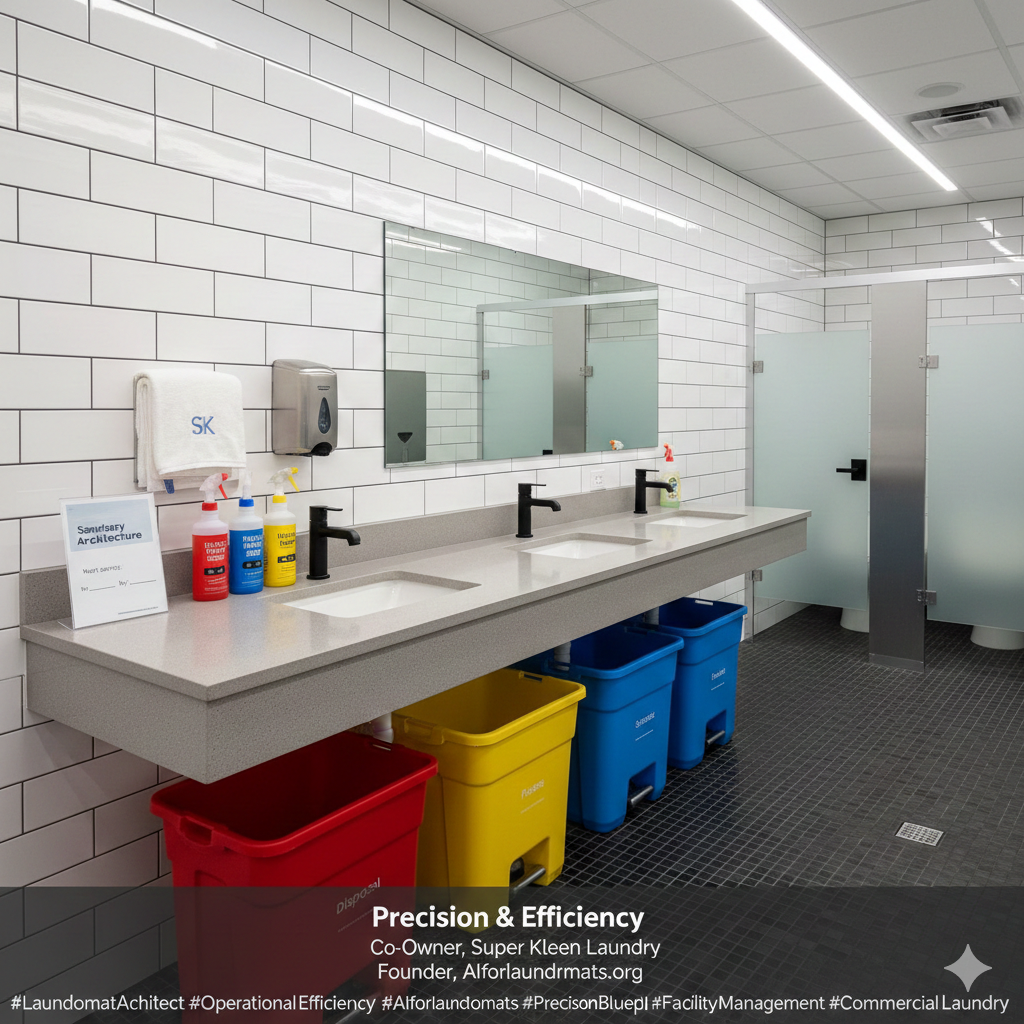
Would you trust a machine to clean your clothes if the floor it sat on was dirty?
Most customers won't. In the laundromat industry, the restroom is often treated as a "necessary evil" or a closing chore. At Super Kleen, we see it differently. We see it as a critical component of our Precision Architecture.
This week, we moved beyond "surface cleaning" to implement a clinical-grade protocol that ensures that if our facility hygiene succeeds, our brand trust succeeds.
Don’t have time to read this, listen to the Audio Lab Episode on Spotify.
The Insight: Hygiene is a Psychological Signal
We often talk about G-force and chemical titration here at The Lab. But the most important chemistry in your store might be the one happening in the restroom.
A clean restroom isn’t just about sanitation; it’s a psychological signal to the customer that every other part of the business—from the bearings in the washers to the security of their laundry—is being handled with the same level of obsession. If you can't manage a floor drain, how can you manage their $40 comforter?
THE PRECISION TAKEAWAY
By moving to a "Sanitary Architecture" model, we achieved three things:
Eliminated Cross-Contamination: We implemented a color-coded hardware system (Red/Yellow/Blue) to ensure cleaning tools never move from a high-risk area to a low-risk area.
Mastered the "Closing Pose": We standardized zero-cost variables—like tucked toilet paper and lowered seats—to signal to the next customer that the space has been professionally reset.
Secured Infrastructure Health: We standardized weekly P-trap hydration to eliminate the risk of sewer gas backups, protecting the facility's air quality and customer comfort.
THE BOTTOM LINE
Precision and efficiency aren't just for the machines; they are for every square inch of the operational infrastructure. When you automate the "how" of cleaning through rigid SOPs, you free up your mental bandwidth to focus on the "why"—building a facility that people drive 40 miles to visit because they know the environment is as professional as the equipment.
THE LAB PROMPT
This Week’s "AI for Laundromats" Implementation: Copy and paste this into your LLM (Gemini, ChatGPT) to audit your facility's "Trust Signals":
"I am a laundromat owner auditing my facility's hygiene infrastructure. Analyze this photo of my commercial restroom. Identify three high-touch surfaces that require specialized antimicrobial treatment to maintain a 'Precision Grade' standard. Suggest a color-coded cleaning protocol that eliminates cross-contamination between high-risk zones and common areas."
The “Water Cooler” Brief
Operating Margin Shift: Projected +4% increase in Customer Lifetime Value (CLV). High-fidelity hygiene standards directly correlate with female customer retention and repeat visits, securing the long-term revenue floor.
Labor Efficiency Variance: +10% gain in labor productivity. By switching to a "Top-Down" cleaning sequence and standardized chemical concentrates, we’ve eliminated redundant cleaning motions and reduced chemical waste.
Infrastructure Health: 100% elimination of sewer gas risk. The implementation of a weekly P-trap hydration schedule (Standard Operating Procedure) has neutralized atmospheric odors, protecting the facility's "Clean Air" brand signal.
The Architect’s Metric: 95% "First Impression" Score. Internal audits show that the "Closing Pose" (seat down, paper tucked) has increased customer perceived value of the facility hygiene without increasing labor costs.
Keep the machines turning and the data churning.
Stay precise,
Nicholas Gomez Co-Owner, Super Kleen Laundry
Founder, AIforLaundromats.org