Eradicating "Washer Renters" and Architecting Facility Boundaries
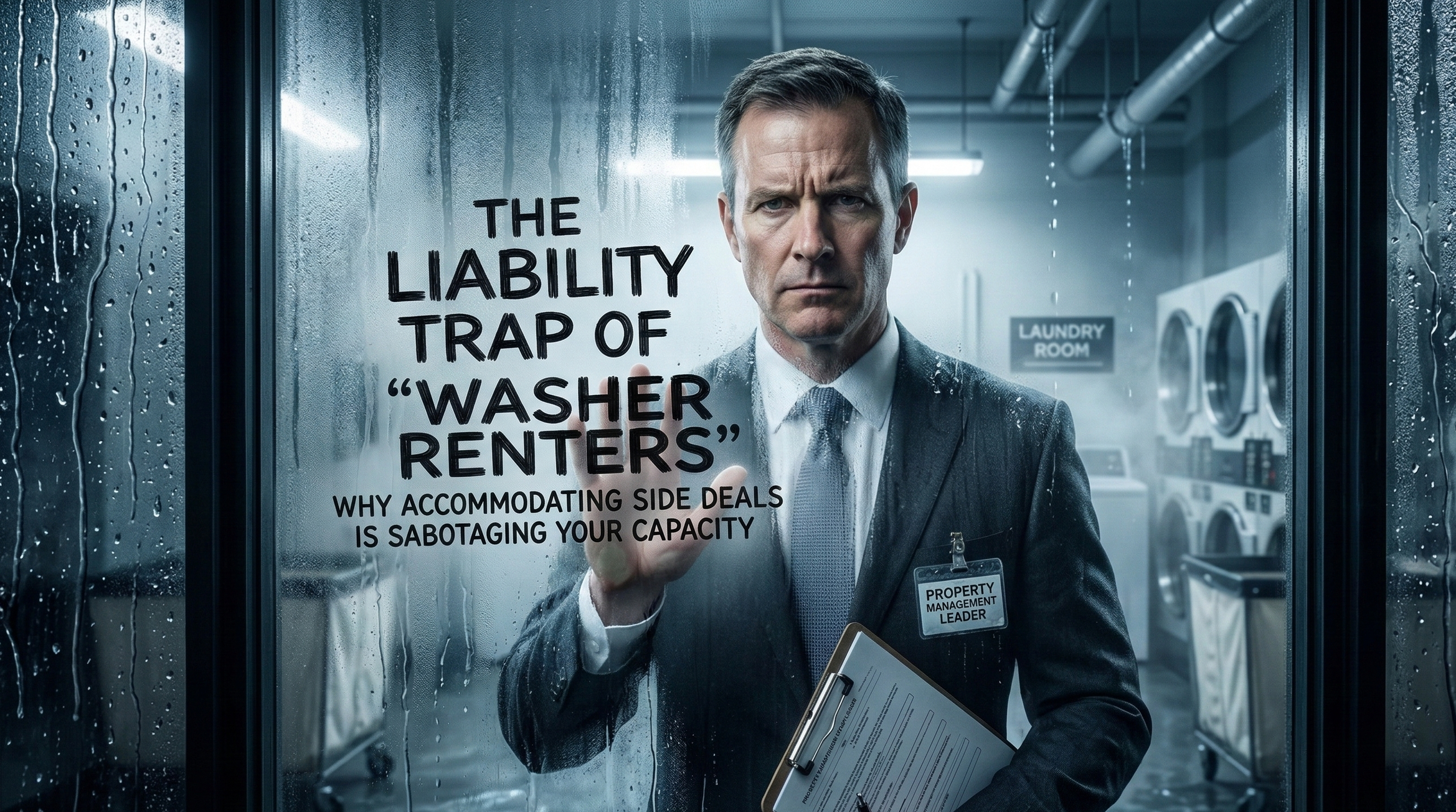
Welcome to The Lab at AIforLaundromats.org. Inside our Living Lab at Super Kleen Laundry, we constantly test our systems to find the friction points that slow down growth. Recently, we had to address a severe case of "Manual Grit" that was threatening our operational infrastructure: the "washer renter."
Developing a policy that is consistent across all customers and staff is one of the most challenging aspects of our business. We recently dealt with a self-serve customer who visited weekly. She was a busy individual who wanted the convenience of dropping off her laundry, but she refused to accept the responsibility of waiting to transfer her clothes from the washer to the dryer.
These types of customers aren't actually renting; they are using our machines as personal storage containers. They treat their laundry as a low priority, ignoring the fact that their behavior bottlenecks the facility and ruins the experience for the next paying customer who walks in expecting available equipment.
The Bottleneck of the "Machine Lease"
In a precision operation, timing is everything. Customers know exactly how long their laundry takes—in our facility, it's a 25 to 35-minute wash cycle, a 15-minute transfer window, and a 40-minute dry cycle. The frustration occurs when a customer's unspoken "machine lease" expires, yet their clothes sit idle, eating up our limited machine capacity.
When this specific customer began repeatedly asking our attendants to manually transfer her laundry for free, it exposed a critical flaw in our floor operations. Our attendants accommodated her, justifying it by saying, "It's just for that one person". But in a systematized business, that one person can ruin the experience for five others.
The Danger of "Side Deals" and Liability Traps
Allowing attendants to manually transfer self-serve laundry creates two massive liabilities. First, it breeds inconsistency. Accommodating one-off requests quickly devolves into dishonest "side deals," where attendants essentially run their own side hustles on the company's time. Professional businesses do not offer off-the-books, à la carte pricing.
Second, it opens the business up to direct financial liability. If an attendant transfers a self-serve load and places an item in the dryer on a setting that violates the garment's tag label, the business immediately becomes the responsible party because our staff touched the laundry.
To solve this, we already have a specific system implementation in place: our "wash, dry, go" drop-off service. This premium service is designed exactly for the busy customer who wants to drop off their clothes and leave, and it protects our business through a signed release stating we are not responsible for damage.
Architecting the "Rules of the Laundry"
In our early days, we operated with a scarcity mindset, believing we had to bend our rules and fit special services in just to keep every customer who walked through the door. Today, we understand that you cannot scale a business by catering to one-off demands that don't fit your core business model.
Instead of reacting emotionally, I used AI to generate a Precision Blueprint to handle these washer renters. We used this technology to develop a strict, consistent policy and an exact script for our attendants to use when declining these transfer requests.
Borrowing a concept from my full-time career in public transportation, we turned this AI-generated script into a physical flyer called the "Rules of the Road, Rules of the Laundry". Now, when a customer asks for a free transfer, our staff can hand them this card, clearly outlining the expectations of our business-customer relationship
Protecting Your Core Model
Ultimately, finding the balance between human interaction and standardized technology is essential. Serving every one-on-one, special request simply takes too much time away from the customers who actually value and pay for our premium services.
I informed our team that it is perfectly acceptable if our facility is no longer a good fit for this customer. If they require special attention but refuse to utilize our drop-off service, they can find another laundromat. Sometimes, protecting your operational infrastructure means having the discipline to tell a bad-fit customer to move on.
Moving from Reactive to Precision.
Stop putting out fires and start building your architecture. Stay precise.
— Nicholas J. Gomez, Co-Owner, Super Kleen Laundry & Founder, AIforlaundromats.org