The ROI of AI Guardrails and Eradicating "Good Friend" Management
Welcome to another Technical Briefing from AIforLaundromats.org. Here in our Living Lab at Super Kleen Laundry in Lake City, Michigan, we are constantly analyzing the data and systems that allow us to scale our business. Recently, we encountered a severe case of "Manual Grit"—not in our machinery, but in our human resources.
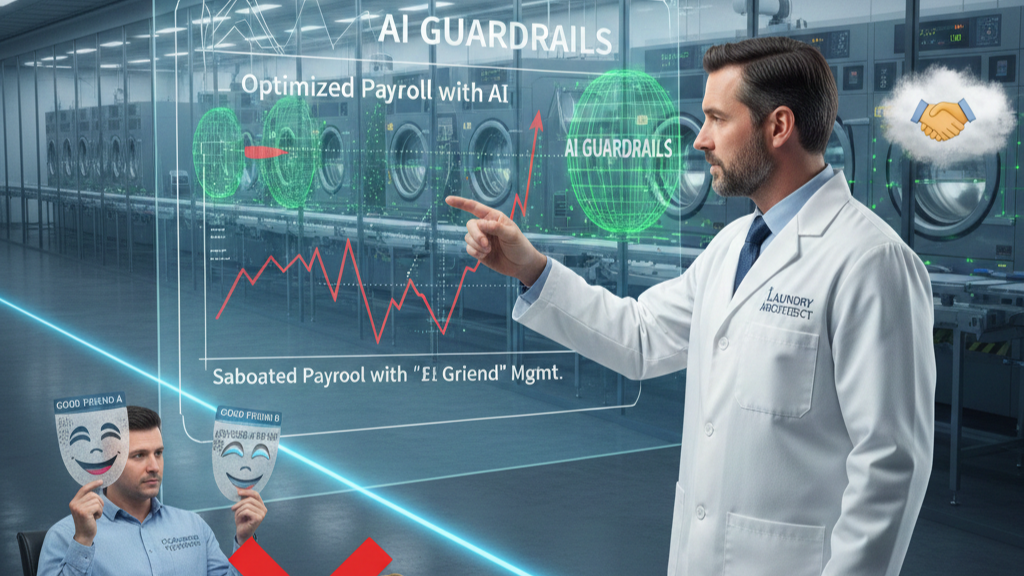
Like many operators, my wife Rebecca and I have fallen into the trap of hiring out of sheer desperation for a warm body to watch the store. We hired an employee—let's call her Sue—relying heavily on a "good friend feeling" rather than establishing a solid foundation of standardized policies. Because we lacked a comprehensive employee handbook, we initially gave her a lot of leeway for personal matters and schedule changes.
Eventually, that lack of structure backfired. Her performance slipped, culminating in her undermining our management authority by attempting to trade a heavy pick-up and delivery Tuesday shift with another team member without our approval. We realized that by failing to set clear boundaries, we had betrayed our own vision; our facility was breeding toxicity, and our human interactions were entirely reactive.
Moving from "Gut-Feeling" to "Guard-Rail" Management
We knew it was time to step out of the daily grind and act as the Architects of our business. Instead of handling the situation emotionally, we turned to our digital architecture to perform a complete "System Audit" of our human interactions.
We used AI to identify our procedural blind spots, specifically looking at where our previous terms of employment lacked the necessary guard rails to prevent staff from undermining our scheduling authority. By asking AI to formulate "best-case" hiring scenarios and strict terms and conditions for employment, we systematically brought the power back to our business architecture.
Today, we use AI to manage our data, track our systems, and maintain a constant "business pulse". Implementing these strict AI guardrails ensures that our staff protects our brand reputation during unstaffed hours, which is exactly how we scale our operations in a rural market of 5,000 people while keeping our owner input to a strict maximum of 10 hours a week.
Your Precision Blueprint: Actionable AI Prompts
To help you build your own operational infrastructure and avoid hiring out of desperation, copy and paste these prompts into your preferred AI tool:
Prompt 1 (The HR System Audit): "Act as an expert HR operational manager. Review my current employee scheduling and attendance practices [insert current practices] and identify any procedural blind spots. Create a list of 5 strict 'guard rails' or policy clauses I need to add to my employee handbook to prevent staff from undermining management authority regarding shift coverage and call-outs."
Prompt 2 (The Best-Case Hiring Scenario): "Act as a Precision Laundry Architect. I need to hire a new store manager but want to avoid hiring purely out of desperation. Formulate high-standard hiring criteria and 3 situational interview questions that will test a candidate's professionalism and cultural fit, ensuring they will protect my brand's reputation during unstaffed hours."
Moving from Reactive to Precision.
Stop putting out fires and start building your architecture. Stay precise.
— Nicholas J. Gomez, Co-Owner, Super Kleen Laundry & Founder, AIforlaundromats.org